How to get better at logic puzzles: habits that actually help
Practical habits that make logic puzzles easier: start from the tightest constraint, mark what you rule out, skip guessing and learn from stuck moments.
Some people seem to see the answer to a logic puzzle the moment they look at it. It is tempting to call that talent, but most of it is habit. Strong solvers look at the board in a particular order, keep track of a particular kind of information, and react to being stuck in a particular way. All of that can be learned, and none of it requires being quick with numbers.
Start where the options are fewest
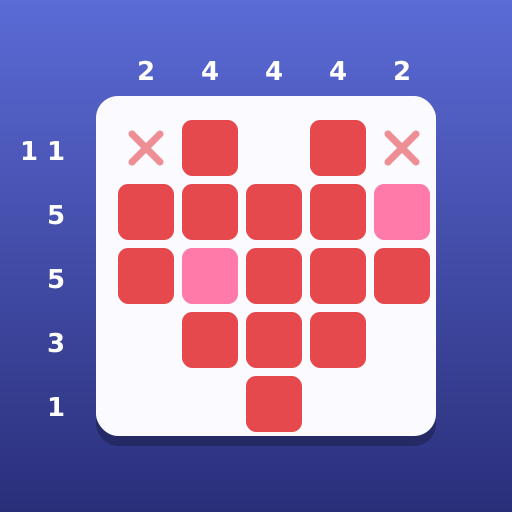
Every logic puzzle has places where almost anything could go and places where very little can. Beginners often start at the top left, because that is where reading starts. Experienced solvers scan for the most constrained spot instead: the row that is nearly full, the clue with the biggest number, the cell boxed in by neighbors. In our Nonogram game, that means the row clue that comes closest to filling the whole row.
A spot with two possibilities is worth far more attention than one with seven. Resolve it, and the effect usually spreads to the cells around it. Make a habit of asking, before every move, where the board is tightest right now.
Track what you have ruled out
Knowing that a cell is a 4 is useful. Knowing that a cell is not a 2, 5 or 7 is often more useful, because those negative facts pile up until only one option survives. Most puzzle games let you add small notes or marks for exactly this reason. Word puzzles work the same way: in Word Guess, every grey letter on the keyboard is a negative fact, and a guess built only from untried letters gathers the most new ones.
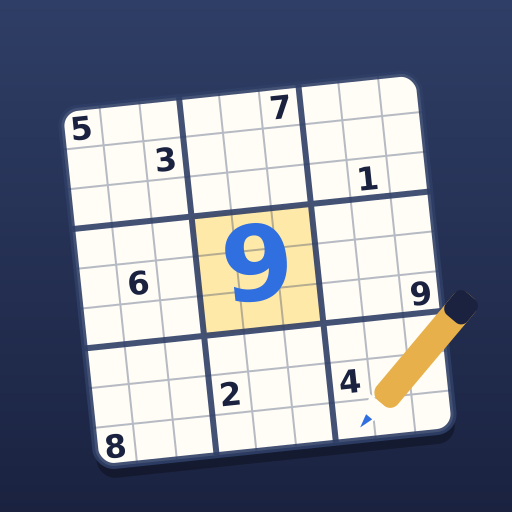
If you rely on memory alone, you will check the same possibilities again and again. Writing them down frees your attention for the next deduction instead of the last one. In Mini Sudoku, the pencil button turns each lantern into a small mark, so a hook that could still hold a 2 or a 5 says so at a glance, and two hooks in one stall showing the same pair tell you neither number can go anywhere else in that stall.
Do not guess
A guess feels faster. In practice it is a loan with a high interest rate. If the guess is wrong, you may not find out for many moves, and by then you have built a chain of conclusions on top of it that all need to be undone.
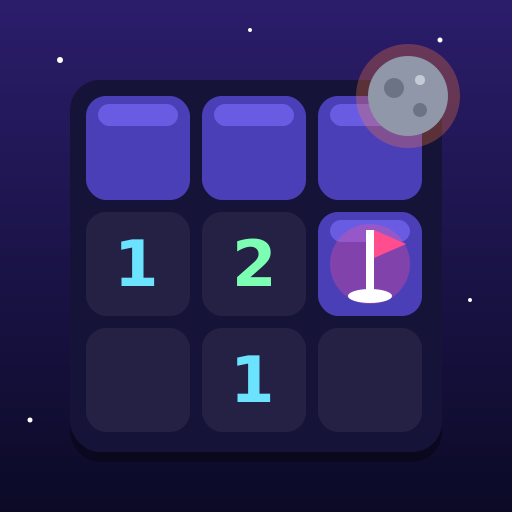
Well-made logic puzzles never require guessing. Minesweeper takes this seriously: every field of hidden asteroids is checked by a solver before you see it, so a sector you cannot prove safe is a sign to look at a different number. If you feel forced to guess, that is information: there is a deduction you have not spotted yet. Treat the urge to guess as a signal to look again rather than permission to gamble.
Learn the patterns that repeat
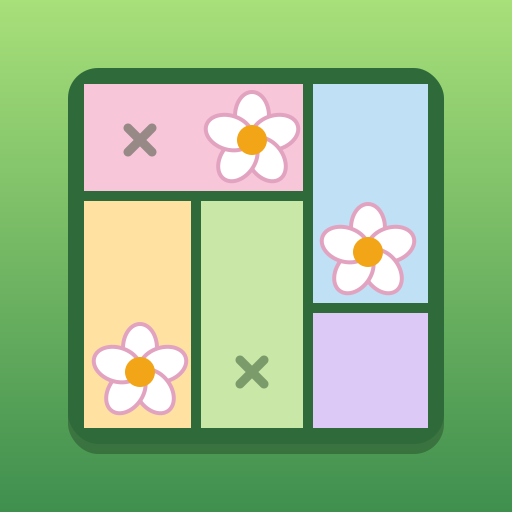
Puzzle types reuse a small set of shapes of reasoning. In grid puzzles, two cells in the same row that can only hold the same two values claim those values for themselves, which removes them from every other cell in that row. In sliding puzzles, a piece in a corner has fewer ways to move than a piece in the middle. In a match-three tile game such as Tile Match, the habit is counting: before taking a new kind of find, check that two more of it are already free, or the bucket ends up holding orphans. In Star Battle, two garden beds that fit inside the same two rows claim both rows. Each game has a short list of these.
Sudoku names these patterns for you: every hint says which technique it used, from a simple hidden single to a pointing pair or an X-wing. When you finish a hard board, take ten seconds to name the move that cracked it. After a few weeks you will spot those moves on sight, which is exactly what looks like talent from the outside.
When you are stuck, change the view
Staring harder at the same corner rarely helps. Switch the question instead. If you have been asking what goes in this cell, ask where this number can go in this row. If you have been working on rows, check the columns. If the board is visual, look at the empty spaces rather than the pieces. In Worm Escape, for example, stop asking which worm can leave and pick the one you most want gone, then trace what sits in its path: the blocker of its blocker is often the worm to tap first. Parking Jam rewards the same habit: find the car in the taxi's lane, then ask what stops that car from leaving it. On the big boards of Arrow Escape, the same trick works at scale: pick one tangled line, follow its arrow to the edge, and clear whatever sits on that path first.
A short break also works better than it sounds. Coming back after a minute, you see the board as a whole again instead of the one region you were fixed on.
Play untimed before you play fast
Timers are fun, but they reward the habits you already have. While you are learning, turn speed off or ignore it and focus on making every move a sure one. Speed follows on its own once the patterns become automatic. Racing too early mostly trains you to guess.
A short practice routine
If you want to improve on purpose, this routine takes about fifteen minutes a day:
- Solve one easy board without notes, as fast as feels comfortable, to warm up.
- Solve one harder board slowly, with notes, and no guessing at all.
- When that board gets stuck, write down where you were stuck and what finally unlocked it.
- Finish with the daily puzzle, so you can measure progress against the same challenge everyone else gets.
You will start boards from the tight spots, you will trust your marks, and being stuck will feel like a clue rather than a wall.